- Context: Unveiling the Opaque Beginnings of Life
- The Scientific Leap: Implantation in a Dish
- Multiple Angles: Implications Across Disciplines
- Reproductive Medicine and Infertility Insights
- Developmental Biology and Congenital Defects
- Pharmacology and Drug Safety Testing
- Ethical Reckoning: Redefining Life’s Boundaries
- Forward-Looking Implications: What to Watch Next
In a groundbreaking development that redefines the study of human gestation, researchers have successfully achieved the implantation of human embryos into uterine organoids, simulating the critical earliest stages of pregnancy outside the maternal body. This scientific milestone, recently reported by prominent research groups including teams from the Weizmann Institute of Science and the University of Cambridge, provides an unprecedented window into the previously inaccessible process of human implantation, raising both profound scientific opportunities and urgent ethical questions regarding the boundaries of life and laboratory intervention.
Context: Unveiling the Opaque Beginnings of Life
For decades, the initial moments of human pregnancy – specifically, the intricate process of implantation – have remained largely a black box. This crucial period, where a nascent embryo embeds itself into the uterine lining, determines the success or failure of a pregnancy and is responsible for a significant proportion of early miscarriages and developmental anomalies. Traditional research methods have been severely limited, primarily due to ethical restrictions on culturing human embryos beyond 14 days post-fertilization and the inherent complexity of studying this phenomenon in vivo.
Organoids, three-dimensional cellular structures grown in vitro that mimic the architecture and function of actual organs, have emerged as powerful tools in biomedical research. Derived from stem cells, these ‘mini-organs’ offer a more physiologically relevant model than traditional 2D cell cultures. Uterine organoids, specifically engineered to replicate the endometrial lining, provide a receptive environment for embryonic interaction, thus bypassing the ethical and practical limitations of studying implantation within a living uterus.
The 14-day rule, an international ethical guideline established in the 1980s, has long served as a critical boundary for human embryo research. This rule prohibits the in vitro culture of human embryos beyond the point where the primitive streak, a precursor to the nervous system, typically forms. The new research, while not exceeding this limit in terms of embryo development, pushes the conceptual boundaries of what constitutes ‘in vitro’ human development, particularly as it involves the initiation of a process previously exclusive to the maternal body.
The Scientific Leap: Implantation in a Dish
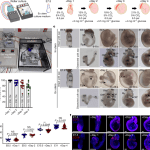
The recent breakthroughs involve sophisticated bioengineering techniques where human blastocysts – early-stage embryos – are co-cultured with uterine organoids. Researchers meticulously create conditions that mimic the uterine environment, allowing the embryo to attach, invade, and begin the formation of early placental structures within the organoid. This replication of implantation in a laboratory setting provides an unprecedented, real-time view of molecular and cellular events that govern this critical developmental step.
Teams, such as those led by Professor Magdalena Zernicka-Goetz at the University of Cambridge and the California Institute of Technology, and Professor Jacob Hanna at the Weizmann Institute of Science, have demonstrated the ability to observe the embryo burrowing into the organoid, initiating the complex dialogue between maternal and embryonic tissues. This includes the appearance of syncytiotrophoblast cells, which are crucial for nutrient exchange and hormone production, marking the earliest signs of placental development.
This achievement is not merely a technical feat; it signifies a paradigm shift in developmental biology. For the first time, scientists can directly manipulate and observe the factors influencing implantation success or failure, from genetic predispositions to environmental stressors. The precision and control offered by this ex utero model promise to unravel long-standing mysteries surrounding early human development.
Multiple Angles: Implications Across Disciplines
Reproductive Medicine and Infertility Insights
The immediate practical applications of this research lie within reproductive medicine. Infertility affects millions globally, with implantation failure being a significant, often unexplained, cause. By observing this process in detail, researchers can identify specific molecular signals, cellular interactions, and genetic factors that contribute to successful or failed implantation. This could lead to improved diagnostic tools, more effective IVF protocols, and novel therapeutic interventions for recurrent miscarriage and unexplained infertility.
“Understanding the very first handshake between embryo and uterus is paramount,” states Dr. Anya Sharma, a reproductive endocrinologist. “This model allows us to dissect that handshake, identifying what makes it firm or falter, potentially revolutionizing how we treat our patients struggling to conceive.”
Developmental Biology and Congenital Defects
Beyond infertility, the organoid-embryo model offers a unique platform to study early human embryogenesis and the origins of congenital defects. Many birth defects originate during the earliest weeks of development, a period previously inaccessible to direct observation. The ability to monitor cell differentiation, tissue patterning, and gene expression during implantation provides crucial insights into how developmental errors arise.
Researchers can now explore the impact of specific gene mutations or environmental toxins on early embryonic development, potentially identifying critical windows of vulnerability and informing preventative strategies. This could significantly advance our understanding of conditions like spina bifida, congenital heart defects, and other early developmental disorders.
Pharmacology and Drug Safety Testing
The pharmaceutical industry stands to benefit from this innovation. Currently, testing the effects of new drugs on early pregnancy is fraught with ethical and practical challenges. The organoid-embryo model could serve as a vital in vitro platform to screen potential therapeutics for their embryotoxicity or teratogenicity, providing a more accurate and ethically sound alternative to animal models or retrospective human studies. This could accelerate drug development while enhancing safety for pregnant individuals and their offspring.
Ethical Reckoning: Redefining Life’s Boundaries
While the scientific potential is immense, the ethical implications are equally profound and demand immediate critical scrutiny. The ability to initiate and observe human-like implantation ex utero pushes the boundaries of the 14-day rule and the very definition of a human embryo in a laboratory setting. Critics argue that allowing embryos to develop in an environment mimicking the uterus, even partially, blurs the line between research and artificial gestation, potentially leading down a slippery slope towards full artificial wombs.
Bioethicists are grappling with questions regarding the moral status of these ‘pregnant’ organoids. Is an embryo implanting into an organoid ethically different from one implanting in a natural uterus, even if development is limited? The research compels a re-evaluation of existing guidelines, which primarily focus on the intrinsic development of the embryo itself, rather than its interaction with an external, lab-created maternal environment.
“This research forces us to confront uncomfortable questions about human dignity and the sanctity of life,” comments Dr. Eleanor Vance, a leading bioethicist. “While the scientific gains are undeniable, we must collectively decide where the line is drawn before we inadvertently cross into territory with unforeseen and potentially irreversible societal consequences.” Concerns extend to the potential for commercialization of such technologies, the creation of ‘research embryos’ that are more ‘human-like’ than previously conceived, and the broader societal implications for reproduction and family structures.
Forward-Looking Implications: What to Watch Next
The successful ex utero implantation of human embryos into organoids marks a pivotal moment in human developmental biology and reproductive science, but it also ushers in an era of intense ethical and regulatory deliberation. The scientific community is now poised to unravel the molecular dance of implantation with unprecedented clarity, promising breakthroughs in understanding and treating infertility and congenital diseases. However, this progress comes with a profound responsibility.
Moving forward, regulatory bodies worldwide, including the International Society for Stem Cell Research (ISSCR) and national ethics committees, will face immense pressure to update guidelines that adequately address these novel capabilities. A critical watchpoint will be the public discourse surrounding the moral status of these laboratory-grown systems and the extent to which society is willing to permit the further externalization of human gestation. The development of more complex organoid models, potentially capable of supporting longer periods of embryonic development, will inevitably trigger renewed and more fervent debates about the 14-day rule and the ultimate purpose of such research.
This breakthrough is not merely a scientific achievement; it is a profound societal challenge, demanding careful navigation of innovation and ethics. The coming years will reveal how humanity chooses to balance the pursuit of knowledge with the profound implications of redefining the very beginnings of human life in a petri dish.