- The Unfolding Regulatory Imperative
- A Decade of Unfettered Growth Meets Governance
- Divergent Paths: Global Regulatory Approaches
- The European Union: A Risk-Based Blueprint
- The United States: Sector-Specific and Executive Directives
- China: State Control and Algorithmic Governance
- The United Kingdom: Pro-Innovation and Adaptive Governance
- Industry Perspectives and Challenges
- Implications for the Global Tech Ecosystem
- The Road Ahead: Enforcement, Adaptation, and Harmonization
Global policymakers, led by the European Union, are rapidly intensifying efforts to establish comprehensive regulatory frameworks for artificial intelligence, with significant legislative milestones occurring throughout 2023 and early 2024 across major economic blocs including Europe, North America, and parts of Asia, driven primarily by escalating concerns over AI’s safety, ethical implications, and profound socio-economic impact.
The Unfolding Regulatory Imperative
The rapid proliferation of sophisticated AI models, from generative AI to advanced autonomous systems, has compelled governments worldwide to move beyond theoretical discussions to concrete legislative action.
This shift is a direct response to a growing consensus among experts and the public regarding the potential for algorithmic bias, privacy infringements, job displacement, and even existential risks posed by unchecked AI development.
The imperative to regulate stems from a desire to foster responsible innovation while safeguarding fundamental rights and societal stability.
A Decade of Unfettered Growth Meets Governance
For over a decade, artificial intelligence research and development largely proceeded with minimal direct governmental oversight, operating within existing legal frameworks designed for traditional software or data privacy.
This period of rapid innovation, often characterized by a ‘move fast and break things’ ethos, led to unprecedented technological advancements but also exposed significant gaps in governance.
Early warning signs, such as data breaches involving AI systems, documented instances of algorithmic discrimination in hiring and lending, and the spread of deepfake misinformation, underscored the urgent need for a more proactive regulatory stance.
Initial attempts at voluntary ethical guidelines by tech companies proved insufficient to address the breadth of concerns, paving the way for state-led interventions.
The emergence of large language models (LLMs) and their widespread adoption in 2022-2023 served as a critical accelerant, demonstrating AI’s immediate societal penetration and amplifying calls for robust oversight.
Divergent Paths: Global Regulatory Approaches
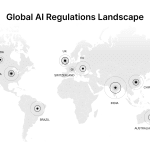
The global landscape of AI regulation is characterized by a fragmented, yet increasingly interconnected, set of national and regional strategies, each reflecting distinct philosophical underpinnings and policy priorities.
The European Union: A Risk-Based Blueprint
The European Union’s AI Act stands as the most comprehensive and influential piece of AI legislation globally, nearing finalization after extensive negotiations.
It adopts a tiered, risk-based approach, categorizing AI systems into unacceptable risk (e.g., social scoring), high-risk (e.g., critical infrastructure, employment, law enforcement), limited risk (e.g., chatbots), and minimal risk applications.
High-risk AI systems face stringent requirements, including mandatory human oversight, data quality standards, transparency obligations, cybersecurity measures, and conformity assessments before market entry.
The Act’s extraterritorial reach, often termed the ‘Brussels Effect,’ means that any AI system used by EU citizens or operating within the EU market must comply, irrespective of its origin, thus setting a de facto global standard.
Compliance costs for companies developing or deploying high-risk AI are projected to be significant, potentially fostering a more cautious approach to innovation within the EU, according to a recent report by the European Centre for Policy Research.
The United States: Sector-Specific and Executive Directives
In contrast to the EU’s omnibus legislation, the United States has favored a more decentralized, sector-specific, and adaptive approach, largely driven by executive orders and agency-specific guidance rather than a single congressional act.
President Biden’s Executive Order on the Safe, Secure, and Trustworthy Development and Use of Artificial Intelligence, issued in October 2023, represents a significant federal push.
This order mandates new safety standards for foundational models, directs agencies to address AI-related risks in critical sectors, promotes responsible innovation, and establishes principles for federal AI procurement.
The National Institute of Standards and Technology (NIST) has also developed an AI Risk Management Framework, offering voluntary guidelines for organizations to manage AI risks, reflecting a preference for flexible standards over rigid regulation.
Congressional efforts remain fragmented, with various bills addressing specific aspects like data privacy, copyright, or election integrity, rather than a unified AI framework.
This approach aims to balance innovation with risk mitigation, allowing for greater agility but potentially creating a less predictable regulatory environment for businesses operating across different sectors.
China: State Control and Algorithmic Governance
China’s regulatory strategy for AI is deeply intertwined with its broader digital governance and national security objectives, emphasizing state control, data sovereignty, and ethical principles aligned with socialist values.
Beijing has enacted a series of regulations targeting specific AI applications, including deep synthesis technology (deepfakes), recommendation algorithms, and generative AI services.
These rules impose strict requirements on content moderation, algorithmic transparency (demanding explanations for recommendation systems), data security, and user consent, often requiring companies to register algorithms with state authorities.
The focus is on preventing misuse, ensuring data security, and aligning AI development with national strategic priorities, including surveillance and social stability.
This top-down approach allows for rapid implementation but also raises concerns about censorship, privacy, and the potential for surveillance at scale.
The United Kingdom: Pro-Innovation and Adaptive Governance
The UK has positioned itself as a proponent of a ‘pro-innovation’ approach to AI governance, seeking to avoid overly prescriptive legislation that could stifle technological advancement.
Its White Paper on AI regulation proposes a framework based on five cross-sectoral principles (safety, security, transparency, fairness, accountability) to be implemented by existing regulators (e.g., ICO, CMA, FCA) within their respective domains.
This ‘light-touch’ approach aims to be adaptable to rapidly evolving technology and avoid a ‘one-size-fits-all’ solution.
While industry stakeholders generally welcome the flexibility, critics argue it may lead to regulatory fragmentation and insufficient protection against emerging AI risks, as noted by the Institute for Government’s recent policy brief.
Industry Perspectives and Challenges
The tech industry faces a complex and often contradictory set of demands from this burgeoning regulatory landscape.
Large multinational corporations, particularly those operating globally, must navigate a patchwork of disparate rules, leading to increased compliance costs and the need for sophisticated legal and technical expertise.
Industry leaders, while generally acknowledging the need for regulation, express concerns about potential innovation stifling, particularly for smaller startups.
According to a survey by the AI Policy Institute, 65% of AI startups reported that navigating international regulations is a significant barrier to market entry and expansion.
There is a strong call for greater international harmonization and interoperability between regulatory frameworks to reduce fragmentation and facilitate cross-border AI development and deployment.
Companies are investing heavily in ‘AI governance’ teams, developing internal ethical guidelines, and building robust compliance infrastructures to meet anticipated regulatory demands.
Implications for the Global Tech Ecosystem
The emergent AI regulatory landscape carries profound implications for technology developers, businesses, consumers, and governments worldwide.
For tech companies, particularly those developing foundational AI models, the era of unfettered experimentation is drawing to a close.
Increased scrutiny will necessitate a ‘responsible by design’ approach, integrating ethical considerations and safety measures from the outset of development.
Compliance with diverse regulations will become a strategic differentiator, potentially favoring larger firms with greater resources for legal and technical adherence.
The ‘Brussels Effect’ will likely continue to shape global standards, compelling companies outside the EU to adopt similar safety and ethical protocols to access the lucrative European market.
For consumers, these regulations promise enhanced protections against AI-related harms, including better data privacy, reduced algorithmic bias, and greater transparency regarding AI’s decision-making processes.
However, some analysts caution that overly restrictive regulations could slow down the pace of innovation, potentially delaying the deployment of beneficial AI applications or increasing their cost.
Governments face the ongoing challenge of striking a delicate balance: fostering innovation that drives economic growth while mitigating risks that could undermine public trust or societal stability.
The need for international cooperation on AI governance will become increasingly critical to prevent regulatory arbitrage and ensure a level playing field for global competition.
The Road Ahead: Enforcement, Adaptation, and Harmonization
The immediate future of AI regulation will pivot from legislative drafting to practical implementation and enforcement.
Governments will need to establish robust enforcement mechanisms, including dedicated regulatory bodies, clear guidelines for compliance, and appropriate penalties for non-adherence.
The effectiveness of these nascent frameworks will be tested as AI technology continues its rapid evolution, necessitating continuous adaptation and refinement of existing laws.
Expect significant legal challenges and interpretative debates as companies and regulators grapple with the nuances of applying broad legislation to complex, dynamic AI systems.
Furthermore, the push for international harmonization, though challenging, will intensify, with forums like the G7 and OECD playing a crucial role in fostering common principles and interoperable standards.
The coming years will reveal whether the world can coalesce around shared principles for AI governance or if a fragmented, multi-polar regulatory environment will persist, shaping the future trajectory of AI development and its global impact.