- Context: The Unchecked Rise of AI and the Call for Governance
- The EU AI Act: A Global Benchmark in the Making
- The United States: A Sector-Specific and Executive-Driven Approach
- China’s Comprehensive, State-Controlled Framework
- Industry Response and the Challenge of Compliance
- Implications and What to Watch Next
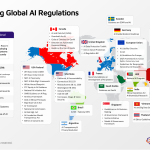
Governments, technology giants, and advocacy groups worldwide are intensifying efforts to define and implement new regulations and ethical frameworks for Artificial Intelligence, with significant legislative advancements observed throughout 2023 and continuing into 2024 across the European Union, the United States, and China. This global legislative push aims to address growing concerns over data privacy, algorithmic bias, accountability, and the profound societal impact of rapidly advancing AI technologies.
Context: The Unchecked Rise of AI and the Call for Governance
The rapid proliferation of Artificial Intelligence applications, from generative models to autonomous systems, has largely outpaced existing legal and ethical frameworks, creating a regulatory vacuum. Early enthusiasm for AI innovation often overshadowed critical discussions about its potential misuse or unintended consequences.
This oversight led to a series of high-profile incidents, including discriminatory outcomes from biased algorithms in hiring and lending, privacy infringements through widespread facial recognition technology, and the proliferation of deepfakes, which collectively underscored the urgent need for robust governance. Consequently, a global consensus has emerged that responsible AI development necessitates clear regulatory guardrails to protect fundamental rights and societal well-being.
The EU AI Act: A Global Benchmark in the Making
The European Union has positioned itself at the forefront of AI regulation with its groundbreaking AI Act, provisionally agreed upon in December 2023. This legislation adopts a risk-based approach, categorizing AI systems into four tiers: unacceptable risk, high risk, limited risk, and minimal risk.
Systems deemed ‘unacceptable risk,’ such as real-time biometric identification in public spaces by law enforcement (with narrow exceptions), are outright banned. High-risk systems, including those used in critical infrastructure, employment, credit scoring, and law enforcement, face stringent requirements concerning data quality, human oversight, transparency, and cybersecurity. Analysts suggest the EU AI Act’s comprehensive nature and extraterritorial reach, often referred to as the ‘Brussels Effect,’ could establish a de facto global standard, compelling companies operating in the EU to adhere to its strictures worldwide.
The United States: A Sector-Specific and Executive-Driven Approach
In contrast to the EU’s omnibus legislation, the United States has pursued a more sector-specific and executive-driven approach to AI governance. President Biden’s Executive Order on the Safe, Secure, and Trustworthy Development and Use of Artificial Intelligence, issued in October 2023, represents the most significant federal action to date.
This order mandates new standards for AI safety and security, protects privacy, promotes equity, and drives competition. It directs agencies like the National Institute of Standards and Technology (NIST) to develop frameworks for AI risk management and testing. While some legislative proposals are in consideration, the U.S. strategy largely emphasizes leveraging existing regulatory bodies and fostering voluntary industry standards, reflecting a balancing act between fostering innovation and mitigating risks.
China’s Comprehensive, State-Controlled Framework
China has adopted a distinct and comprehensive regulatory approach, characterized by rapid legislative action and a strong emphasis on state control and societal stability. Beijing has enacted a series of regulations targeting specific AI applications, including rules for algorithmic recommendation services (2021), deep synthesis technologies (2023), and generative AI services (2023).
These regulations prioritize data security, content moderation, and algorithmic transparency, mandating that AI service providers ensure content adheres to socialist values and that users are informed when interacting with AI-generated content. China’s framework also includes strict requirements for data localization and government oversight, reflecting a top-down strategy aimed at harnessing AI for national development while tightly controlling its potential societal disruptions.
Industry Response and the Challenge of Compliance
The evolving global regulatory landscape presents significant challenges and opportunities for the technology industry. Major AI developers, including Google, Microsoft, and OpenAI, have publicly committed to responsible AI principles and are investing heavily in ethical AI research and internal governance structures.
However, the fragmentation of regulations across different jurisdictions creates a complex compliance environment, potentially increasing operational costs and slowing market entry for new AI products. Companies must now navigate a patchwork of rules, adapting their AI systems to diverse legal requirements, from data provenance and bias auditing to transparency reporting and human oversight mandates. This necessitates a proactive ‘AI ethics by design’ approach, integrating regulatory considerations from the initial stages of development.
Implications and What to Watch Next
The global race to regulate AI signifies a pivotal shift toward a more governed technological future, moving beyond self-regulation to legally binding frameworks. For businesses, this means increased scrutiny, higher compliance burdens, and a strategic imperative to embed ethical considerations into their AI development lifecycle.
For consumers, these regulations offer stronger protections against potential harms, fostering greater trust in AI systems. The critical challenge remains the agility of regulation to keep pace with rapid technological advancements. Moving forward, observers should closely monitor the enforcement mechanisms of these new laws, the potential for international regulatory harmonization or continued fragmentation, and the impact of these frameworks on the pace and direction of global AI innovation. The next phase will likely involve refining existing legislation and addressing novel challenges posed by increasingly sophisticated AI models, demanding continuous dialogue between policymakers, industry, and civil society.